Ice swimming – what does it mean?
Winter swimming, which means taking short baths in cold water. People who practice winter swimming have peculiar names – in Poland, they are called "morses," in Finland "seals," and in the USA "polar bears." Winter swimming has a long tradition. The first mentions of cold baths date back to antiquity. Winter swimming can generally be defined as immersion or a short bath in cold water. Water with a temperature below 5°C is considered as such. Winter swimming can be practiced in a lake, river, sea, or any other body of water from autumn to spring. It is done individually, although group winter swimming is quite popular. Most enthusiasts of this form of activity come from Nordic countries and Eastern Europe.
How to prepare for winter swimming?
Preparation for winter swimming
Step I
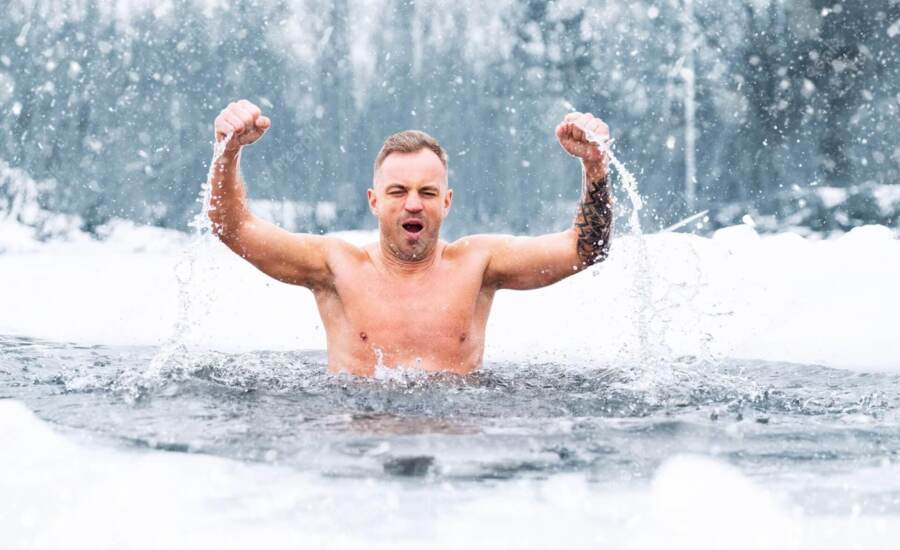
The first and most important thing we should do when starting our adventure with winter swimming is to visit a doctor to rule out any contraindications to this type of activity. Then we should start training in the summer, swimming in rivers or lakes, gradually getting our body used to lower temperatures. Another very important step is to regularly take cold showers. First, take a bath at a comfortable temperature, then turn the coldest water on and pour it over the body, from the feet towards the heart. It is important to maintain steady breathing and stay calm. Such a shower should last about 3 minutes at the beginning, but over time we can extend it.
Equipment and preparation for winter swimming
Step II
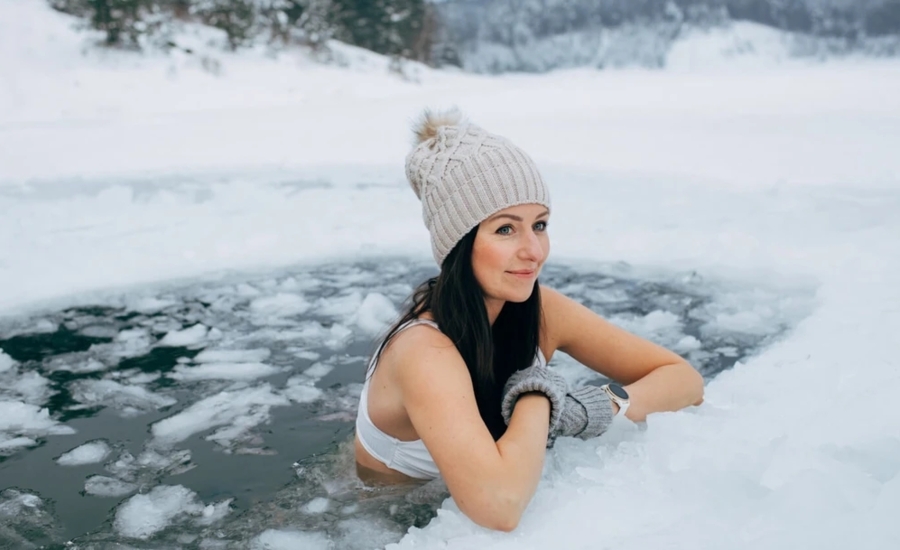
Cold water baths are taken in appropriate clothing. A winter swimmer wears a swimsuit and protects the parts of the body most sensitive to low temperatures – gloves on the hands, and a swimming cap and hat on the head. Special shoes for winter swimming in water are required. The bath is preceded by at least a 15-minute warm-up. Entry into the water should be decisive, and submersion gradual. Beginners should stay in the cold water for several dozen seconds. Experienced winter swimmers can allow themselves a bath lasting several minutes, on average 3-5 minutes. When going deeper underwater, remember to tense muscles and hold your breath.
How to take care of yourself after winter swimming
Step III
After coming out of the cold ice bath, there should be a large towel, warm clothing, and preferably a blanket waiting. After thoroughly drying off, it is necessary to warm up the body – intense exercise and warm drinks. With appropriate precautions, ice swimming can be a unique way to spend free time that positively affects health.
Benefits of ice swimming
Natural immune support
- body hardening and increasing cold tolerance,
- improving physical performance,
- possible improvement of certain blood parameters, e.g. increase in hemoglobin concentration,
- possible enhancement of immune system response in case of infections (however, winter swimming is not recommended during infections),
- protection against harmful effects of free radicals,
- acceleration of recovery after exertion,
- improvement of well-being.

Is ice swimming safe?
If we follow the rules, ice bathing is a safe form of physical activity. Above all, we must have knowledge and be aware of the risks we are taking. Staying too long in icy water can lead to hypothermia. This is a condition in which our body temperature drops below 35 degrees Celsius. The first symptom is muscle shivering, which can be followed by loss of consciousness, which in turn can result in drowning. Therefore, ice bathing alone is not recommended.
Another danger that can occur is thermal shock. At the moment we enter icy water, the muscles supporting breathing contract. This can lead to hyperventilation, which we will be unable to control, and as a result to choking and death. Ice bathing is very dangerous for people with heart failure because cold water causes centralization of circulation, which in turn results in excessive strain on the heart.


Ice swimming – who should not do it?
Contraindications for ice swimming
Winter swimming, although it provides many benefits for the body, is not suitable for everyone. Starting this form of activity should be discussed with a doctor. Only after a thorough health assessment will a specialist determine whether cold water baths are completely safe. The main contraindications for them are cardiovascular diseases, such as:
- ischemic heart disease (also called coronary artery disease),
- hypertrophy of the heart muscle,
- long QT syndrome,
- uncontrolled arterial hypertension,
- post-heart attack or stroke condition.
Winter swimming is not a good idea in cases of: hypothyroidism, epilepsy, kidney diseases. It is contraindicated for people suffering from acute infectious diseases or with conditions involving intolerance to low temperatures (including Raynaud's syndrome). Winter swimming is excluded during pregnancy and feverish states. Bathing in water should not take place after alcohol consumption, when very tired, or when sleep-deprived.